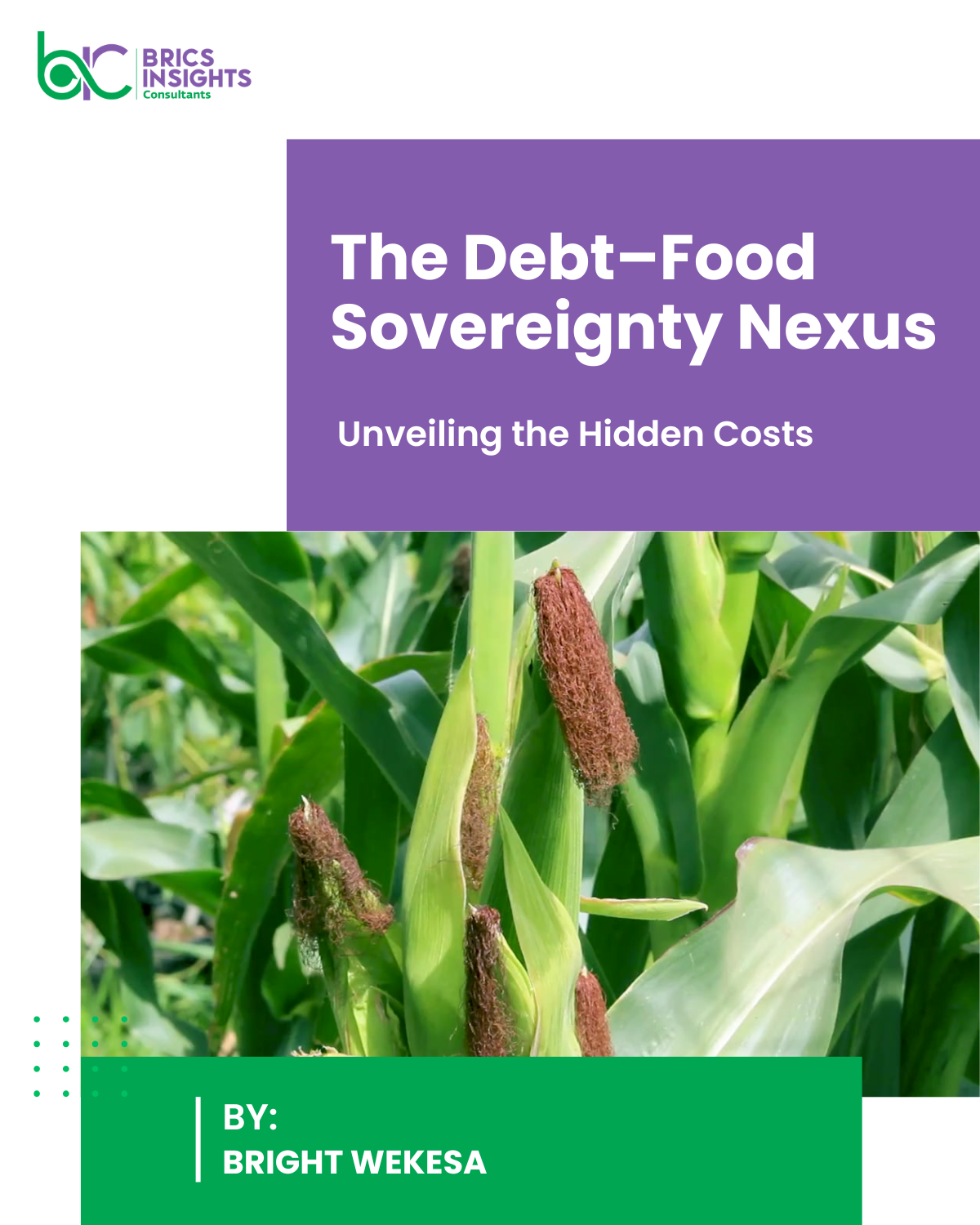
THE DEBT FOOD SOVEREIGNITY NEXUS: UNVEIING THE HIDDEN COSTS
Across much of the developing world, and particularly in Africa, the relationship between sovereign debt and food sovereignty is no longer abstract, it is a pressing reality with deep implications for sustainable development, nutrition, and resilience.
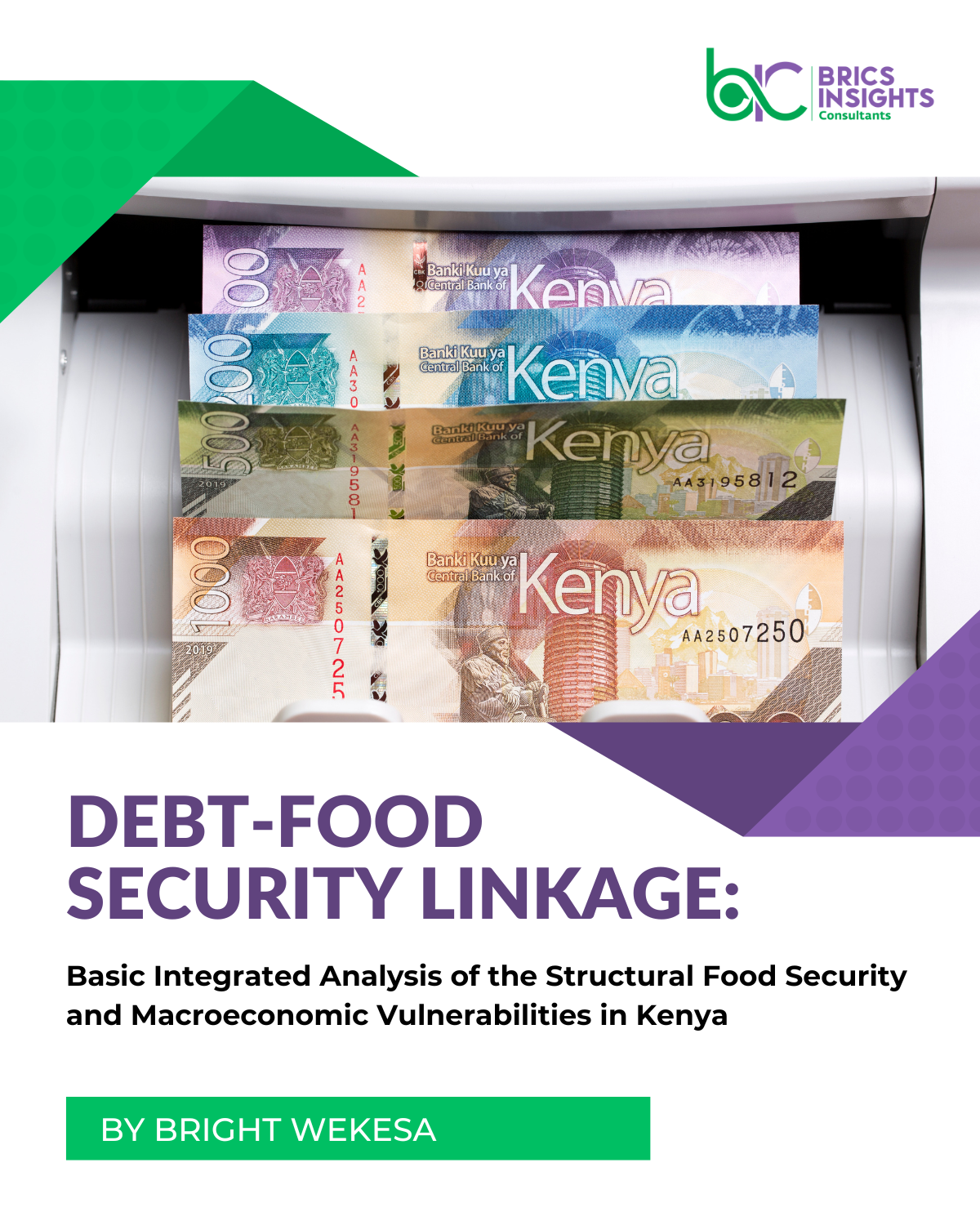
According to the United Nations, global public debt reached a record $97 trillion in 2023, with developing countries holding about $29 trillion, roughly 30 % of the total, up sharply from 16 % in 2010. In Africa, the total debt stock is currently around $2 trillion and the median public debt-to-GDP ratio is around 62 %, reflecting the growing burden of debt servicing on national budgets.
The debt–food sovereignty nexus thus reflects a dual crisis: countries constrained by rising debt find it difficult to allocate adequate public funds to bolster domestic food systems, enhance agricultural productivity, and protect vulnerable populations. This not only undermines the resilience of local food systems but also deepens reliance on volatile global food markets.
Download and read the pdf to find out more or view the full breakdown on our LinkedIn at: https://www.linkedin.com/posts/brics-insights-consulting-ltd_foodsecurity-foodsovereignity-development-activity-7425151366936911872-29aW?utm_source=share&utm_medium=member_desktop&rcm=ACoAACaQAZgBrDrDaUM7VSDSX1xRprqDRPhEpKw