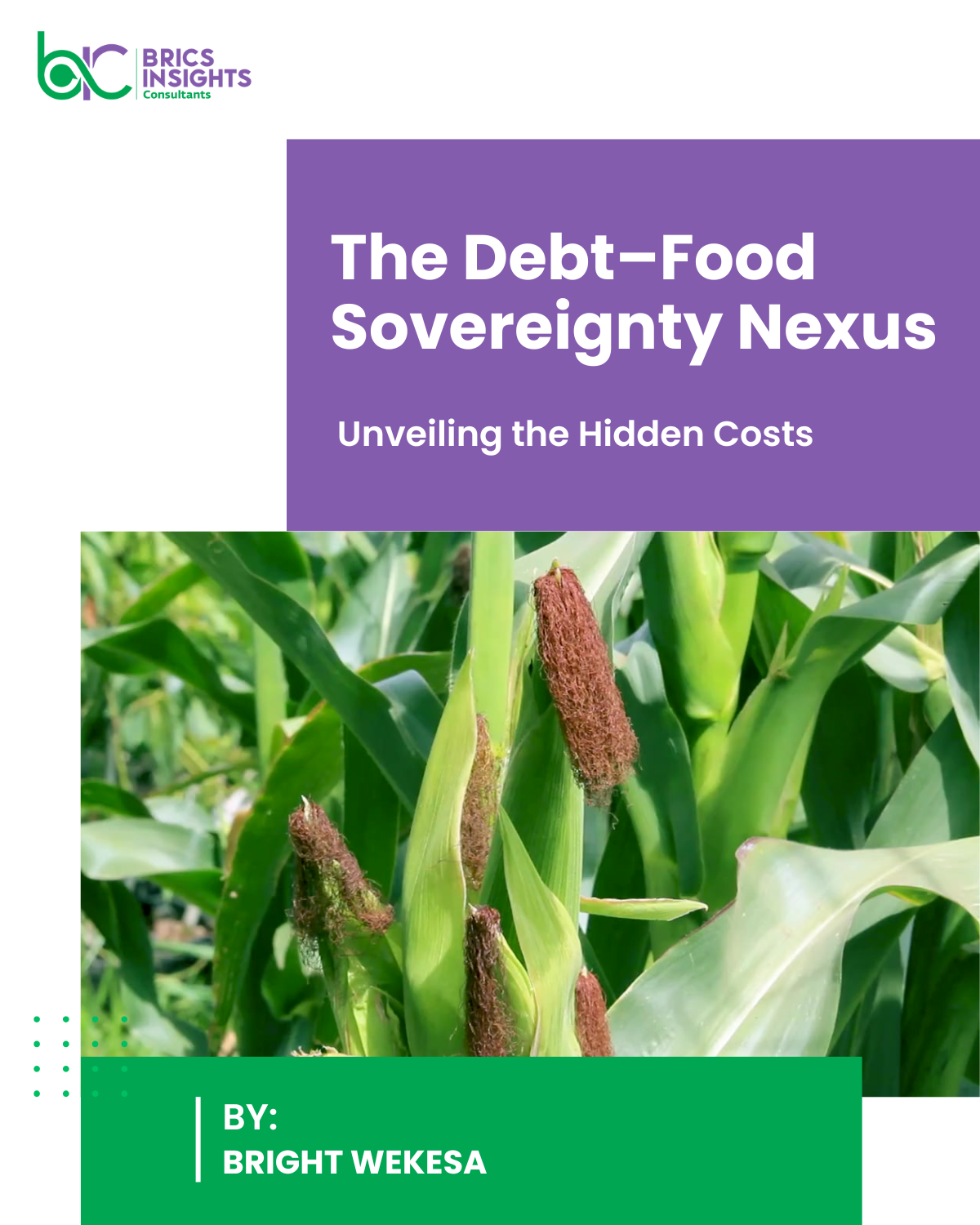
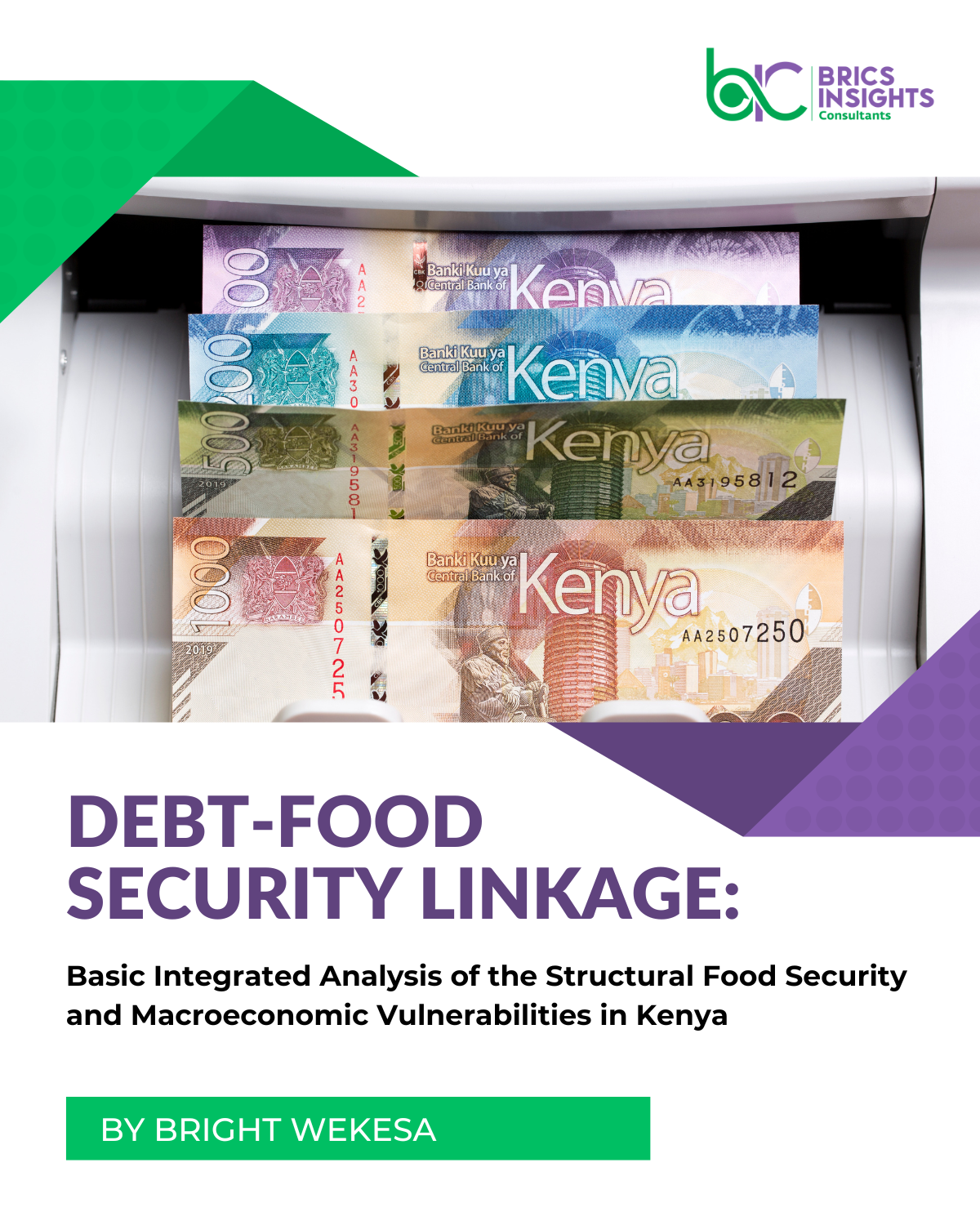
DEBT-FOOD SECURITY LINKAGE: BASIC INTEGRATED ANALYSIS OF THE STRUCTURAL FOOD SECURITY AND MACROECONOMIC VULNERABILITIES IN KENYA
Summary
This blog presents an integrated analysis of the structural linkages between food security and macroeconomic vulnerabilities in Kenya. Using data from the Economic Survey 2025 Food Balance Sheet (FBS) and the 2025/26 Debt Sustainability Analysis (DSA) published in the Budget Policy Statement (2026), it highlights how Kenya’s food availability, nutritional adequacy, and import reliance intersect with sovereign debt dynamics and external sector constraints.
In brief, Kenya’s per capita daily caloric supply ranges narrowly around 2,100 kcal, slightly above the FAO minimum threshold, with protein and fat intake generally adequate but dietary patterns heavily reliant on cereals and vegetal products. Self-Sufficiency Ratios (SSR) have improved, exceeding 105% in aggregate in 2024, while Import Dependency Ratios (IDR) for cereals and other plant staples remain above 20% sometimes, signalling moderate structural vulnerability to global commodity markets.
On debt dynamics, the DSA provided in the 2026 BPS indicates that although Kenya’s debt-to-GDP ratios remain within solvency thresholds, liquidity pressures, particularly high debt service-to-exports and debt service-to-revenue ratios, absorb significant foreign exchange resources. This constrains the country’s capacity to finance essential food imports, especially under volatile exchange rates or global price shocks, creating a direct feedback loop between sovereign debt obligations and food system resilience.
The analysis underscores that Kenya’s food security is not solely determined by domestic production but is also structurally contingent on macroeconomic stability, foreign exchange availability, and debt management. Strengthening resilience requires an integrated policy approach encompassing debt portfolio rebalancing, export diversification, dietary and crop diversification, and targeted foreign exchange buffer strategies to safeguard food systems against external and fiscal shocks.