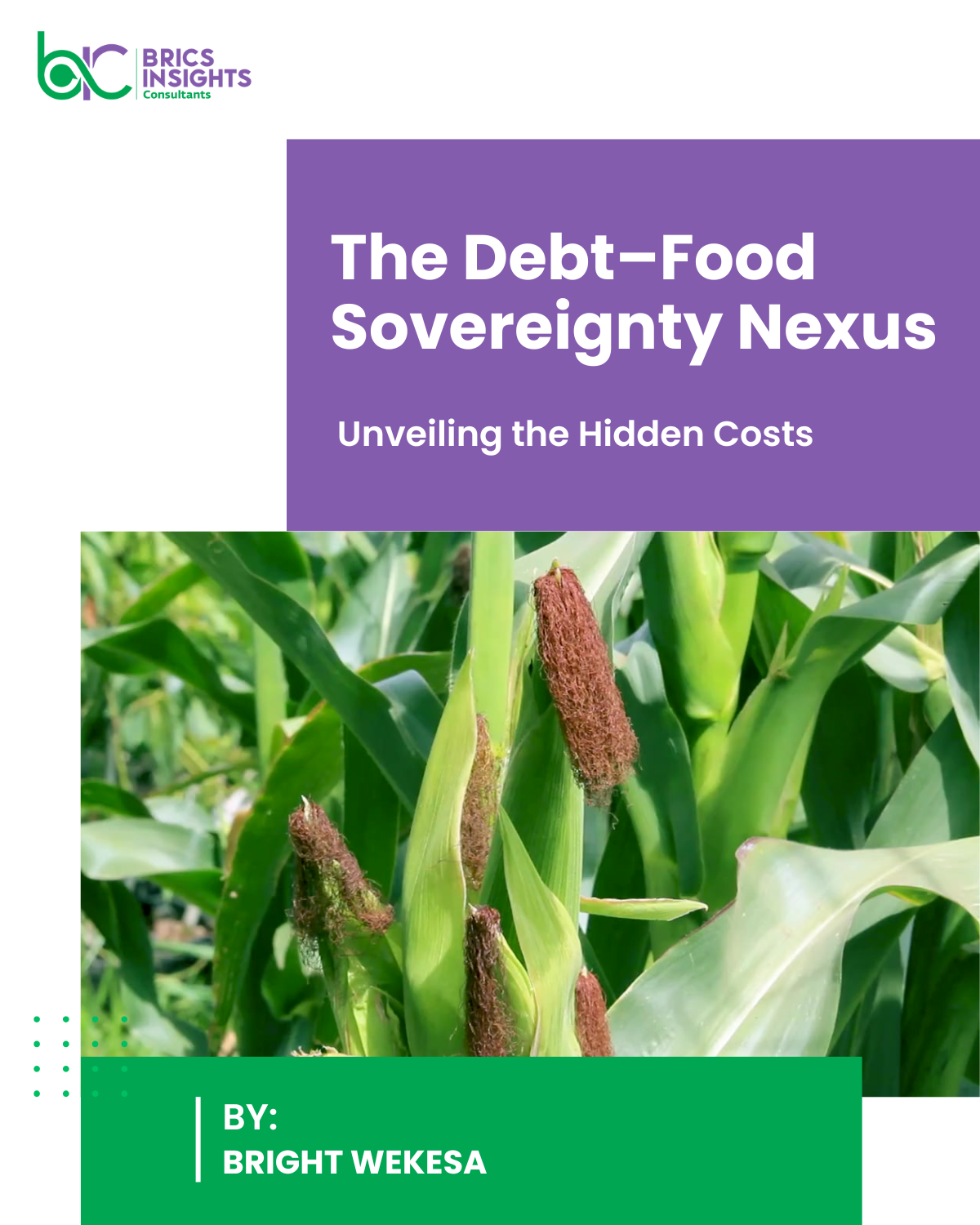
THE DEBT FOOD SOVEREIGNITY NEXUS: UNVEIING THE HIDDEN COSTS
Across much of the developing world, and particularly in Africa, the relationship between sovereign debt and food sovereignty is no longer abstract, it is a pressing reality with deep implications for sustainable development, nutrition, and resilience.
According to the United Nations, global public debt reached a record $97 trillion in 2023, with developing countries holding about $29 trillion, roughly 30 % of the total, up sharply from 16 % in 2010. In Africa, the total debt stock is currently around $2 trillion and the median public debt-to-GDP ratio is around 62 %, reflecting the growing burden of debt servicing on national budgets.